Not everyone who lands on your website is ready to buy. In fact, most of them aren’t. Some have only just realised they have a problem. Others are weighing up their options. A smaller group has their card out and simply wants reassurance that they’re making the right choice.
If you publish the same type of content for all of these people, you’ll miss most of them. The visitor who is still working out what their problem even is doesn’t want a sales page. The visitor who is ready to buy doesn’t want another introductory explainer.
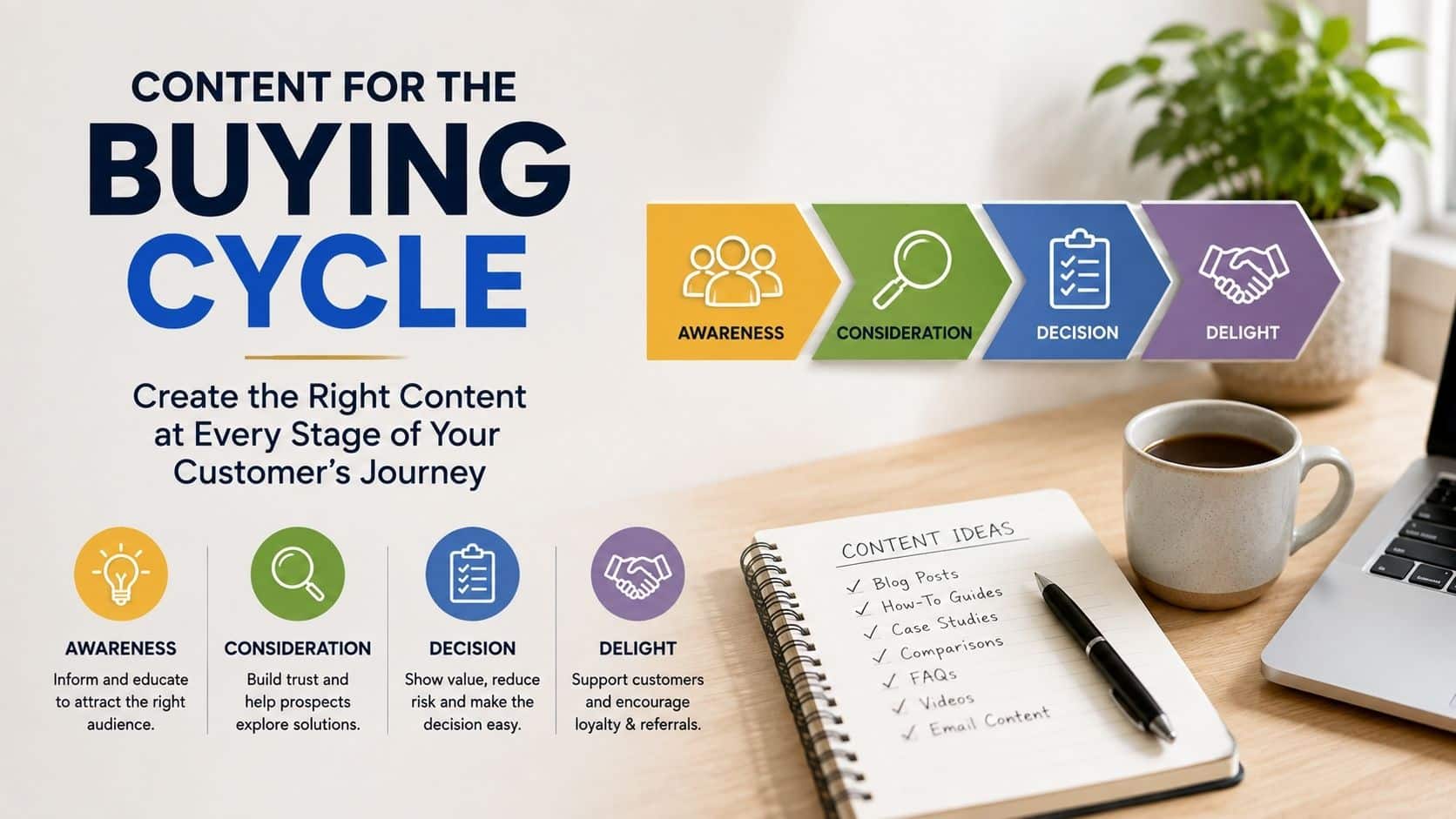
This is where the buying cycle comes in. When you understand the stages your customers move through, you can create content that meets them exactly where they are and gently moves them on to the next step. In this post, we’ll walk through the three core stages, Awareness, Consideration and Purchase, and the content that works best in each.
What is the buying cycle?
The buying cycle (sometimes called the buyer’s journey) is the path a person takes from first noticing a need through to making a purchase. Think of it like planning a holiday. First you realise you’re overdue a break. Then you browse destinations, compare hotels and read reviews. Finally, you pick one and book it.
Each of those steps involves a different mindset, a different set of questions and, crucially, a different type of content. Let’s take them one at a time.
Stage 1: Awareness
What’s happening at this stage
At the awareness stage, your customers realise they have a problem. Sometimes they can put a name to it straight away. More often, they can’t. They know something isn’t working, but they’re still searching to find out what the problem specifically is.
A good example is a business owner who notices their website isn’t bringing in enquiries. They may not yet know whether that’s an SEO issue, a design issue, a messaging issue or a mix of all three. So they head to Google and type in something like “why is my website not getting enquiries”. They aren’t looking for a supplier yet. They’re looking for a diagnosis.
This is the widest part of the funnel, and it’s where the most people are. It’s also where they are least ready to buy, so patience pays off.
The content that works here
Blog posts are extremely well suited to the awareness phase. The best awareness content is value based, informative and educational, with minimal selling. Your goal isn’t to close a deal. It’s to be the helpful voice that explains the problem clearly and earns a little trust.
Content that works well at this stage includes:
- Educational blog posts that explain a problem or concept, such as “Why isn’t my website showing up on Google?”
- “What is” and “how does” articles that give a name to the thing your reader is experiencing
- Checklists and short guides that help someone self-diagnose
- Explainer videos that walk through a concept in plain language
- Social media posts that highlight a common pain point and point back to a fuller resource
The key is to answer the question the reader actually has, not the question you wish they were asking.
What you want to achieve
Because these visitors aren’t ready to buy, your main objective is to capture them as leads so you can nurture them further. That might mean offering a downloadable guide in exchange for an email address, inviting them to subscribe to your newsletter, or simply making it easy for them to follow you. The relationship starts here, even if the sale is months away.
Stage 2: Consideration
What’s happening at this stage
At the consideration stage, the customer knows their problem and is evaluating potential solutions. They want to understand all the available options and approaches and determine which option is right for them.
Going back to our business owner, they’ve now learnt that their website isn’t ranking because it hasn’t been optimised for search. They’re asking a new set of questions: Should I learn SEO myself? Should I hire a freelancer? Should I work with an agency? What does good SEO actually involve? What should it cost?
They’re comparing routes, not yet vendors. They’re building an understanding of the landscape so they can make an informed decision.
The content that works here
Consideration content goes deeper than awareness content. It’s still helpful and educational, but it moves from “here’s your problem” to “here are your options and here’s how to think about them”. This is where you can start demonstrating your expertise more directly.
Content that works well at this stage includes:
- Buying guides that explain what to look for when choosing a solution, such as “What to look for in an SEO agency”
- Expert guides that go into real depth on a topic, positioning you as someone who clearly knows their subject
- Comparison articles that weigh up different approaches fairly, for example “DIY SEO vs hiring an agency: which is right for your business?”
- Tutorials that show how something is done, giving the reader a realistic picture of what’s involved
- Video content such as walkthroughs, screen recordings and explainers
- Podcasts and webinars where you talk through a topic in more detail and let your personality come through
Honesty matters here. If you write a comparison piece that’s obviously slanted towards your own service, readers will notice. A balanced guide that helps someone make a good decision, even if that decision isn’t you, builds far more trust in the long run.
What you want to achieve
At this stage you want to position yourself as the obvious expert, keep the lead engaged and warm, and make sure that when the reader moves to the next stage, you are already on their shortlist. Email nurture sequences, retargeting and internal links from awareness content all help here.
Stage 3: Purchase
What’s happening at this stage
At the purchase stage, the customer is ready to buy. They’ve evaluated their options and are now choosing which specific solution to go with. This often involves making a list of vendors, suppliers or products and comparing them directly.
Our business owner has decided to work with an agency. Now they’re looking at three or four specific agencies and asking, “Who has done this before for businesses like mine?” What results did they get? What’s it actually like to work with them? Can I trust them with this?
These questions are about confidence and reassurance rather than education. The reader has done the learning. Now they need proof.
The content that works here
Purchase stage content is where selling is not just acceptable but expected. The reader wants to know why they should choose you, and they want evidence to back it up.
Content that works well at this stage includes:
- Sales pages and service pages that clearly explain what you offer, who it’s for, what’s included and how to get started
- Case studies that show a real client, the problem they had, what you did and the results you achieved
- Review videos and testimonials that let satisfied clients speak for you
- Free trials, audits or consultations that let the customer experience what you do before committing
- Pricing pages or clear pricing information so there are no surprises
- FAQs that address the last few objections standing in the way
What you want to achieve
The goal here is simple: remove doubt and make it easy to say yes. Every piece of purchase content should have a clear next step, whether that’s “book a call”, “start your free trial” or “request a quote”. Don’t make the reader hunt for it.
Bringing it all together
The most effective content strategies don’t treat these stages as separate silos. They connect them. A blog post written for the awareness stage should link naturally to a buying guide for the consideration stage. That guide should point towards a case study or service page for the purchase stage. Each piece of content does its own job while quietly guiding the reader towards the next one.
Here’s a quick summary:
| Stage | What the customer is thinking | Content that works |
|---|---|---|
| Awareness | “Something’s wrong, but what exactly?” | Educational blog posts, explainers, checklists, short videos |
| Consideration | “What are my options and which is right for me?” | Buying guides, expert guides, comparisons, tutorials, video, podcasts |
| Purchase | “Which specific provider should I choose?” | Sales pages, case studies, review videos, free trials, FAQs |
If you look at your own website and find that almost everything you’ve published sits in one stage (and for most small businesses, that’s the purchase stage), you now know where the gaps are.
Next steps
- Audit what you already have. List your existing pages and posts and assign each one to a stage. Look for the gaps.
- Start with the biggest gap. For most businesses, that’s awareness content, because it brings in new people rather than relying on those who already know you.
- Write for one stage at a time. Don’t try to cover all three in a single piece. Let each page do one job well.
- Link the stages together. Add internal links so readers can move naturally from one stage to the next.
- Add a lead capture to your awareness content. A simple guide or newsletter sign-up turns readers into contacts you can nurture.
Want more of the right people finding you? Have a look at our SEO and marketing services, or book a call and we can talk it through.