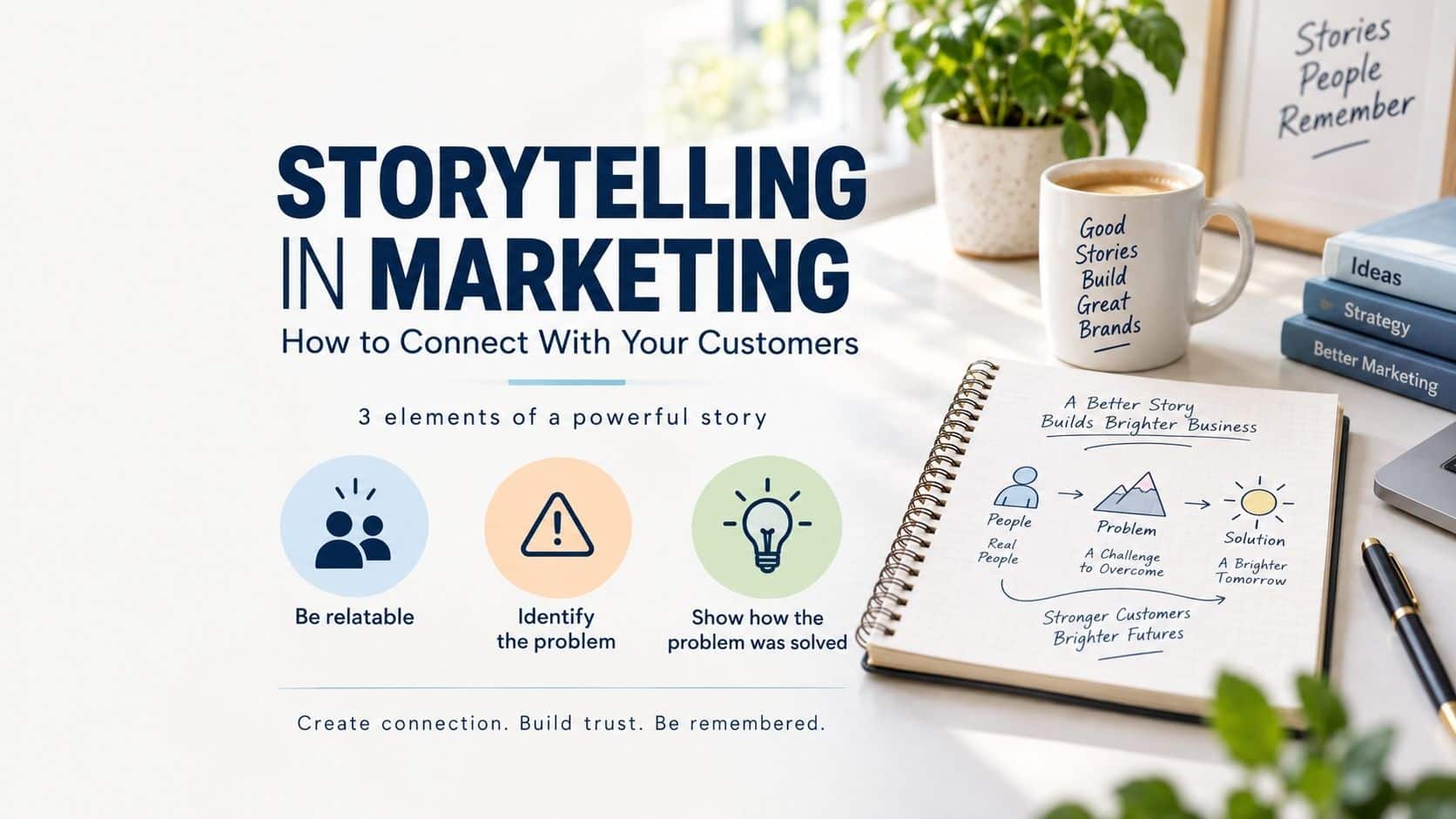
People love stories. We always have. Long before anyone wrote anything down, we were sitting around fires telling each other what happened on the hunt, who fell out with whom, and why you should never trust the bloke from the next valley. Stories inspire us, fuel our imagination and stir up emotions we didn’t know we had.
So what does any of that have to do with marketing?
Quite a lot, as it turns out. Storytelling in marketing is one of the simplest ways for a small business to be remembered, trusted and chosen. In this post, I’ll go through why it works and the three elements every story needs if you want your customers to see themselves in it.
Why storytelling in marketing works
Think about the adverts you actually remember. I’d bet most of them aren’t the ones that listed features and prices. They’re the ones with a character, a bit of drama, and a payoff at the end. The meerkat. The John Lewis Christmas advert that had half the country welling up. The bear and the hare. None of those sold you a product by explaining the product. They told you a story and let you draw your own conclusions.
Storytelling in marketing doesn’t have to mean a big budget or a cartoon mascot, though. Some of the most effective stories I’ve come across from small businesses are simply personal. The plumber who started out after his dad’s boiler packed up on Christmas Eve and nobody would come out. The accountant who left a big firm because she was fed up watching small businesses get overcharged for advice they didn’t understand. Real people, real reasons, told plainly.
Both approaches work because they do the same job. They create a connection between you and your customer. And with a connection comes trust.
That trust is the whole point. People buy from businesses they feel they know. Tell an authentic story and your customers will remember you, come back to you, and recommend you. It’s also one of the few things your competitors can’t copy. Anyone can match your prices or your list of services. Nobody else has your story.
The 3 key elements of a story your customers will identify with
Not every story lands, though. The ones that work tend to share a few ingredients. Let’s go through them.
1. Be relatable
Every story has a main character, and the main character in yours needs to be someone your customer can see themselves in.
If the story is about you, that means showing the parts of yourself your customers will recognise. If you work with tradespeople, they don’t need to hear about your industry awards. They want to know you understand what it’s like to be quoting jobs at nine o’clock at night after a full day on-site.
If the story is about a customer, pick one who looks like the people you want more of. A local café owner reading about how you helped another local café owner is going to lean in. The same story about a national chain would wash over them.
This all comes back to knowing your audience. Who are they? What do they worry about? What do they say to their mates in the pub about their business? The better you know that, the more precisely your story can speak to them.
2. Identify the problem
A story with no problem isn’t a story. It’s just a description.
So what obstacle does your main character face? And, more importantly, is it a problem your customers will recognise from their own lives?
This is where a lot of business storytelling falls flat. The problem gets skipped over in a sentence so you can get to the good bit where you save the day. But the problem is the good bit. It’s the part where your reader thinks “that’s me”. The frustration of a website nobody can find. The phone that doesn’t ring. The competitor down the road who’s somehow always busier.
Take your time with it. Describe the journey through the problem, not just the problem itself. What did they try first? What didn’t work? How did it feel? That’s what your customer is living through right now, and seeing it written down tells them you understand.
3. Show how the problem was solved
Now for the resolution. How did your main character get past the obstacle?
Two things matter here. First, be honest about how it happened. If it took time, say so. If there were setbacks along the way, include them. A resolution that’s too neat feels like an advert, and people have very good radar for adverts.
Second, make sure the solution in your story lines up with the solution your customer is actually looking for. If your customer wants more enquiries from local people, your story should end with more enquiries from local people, not with a shiny new logo. The story should quietly answer the question “could this work for me?” with a yes.
Making your story engaging
Getting the elements right is most of the job, but a few things will make the difference between a story that gets read and one that gets skimmed.
Write the way you speak. If you wouldn’t say “we leverage synergies” to a customer’s face, don’t write it either. Plain language is more trustworthy, and it’s far more enjoyable to read.
Use specific details. “A local business” is forgettable. “A dog groomer in Frinton-on-Sea with a waiting list and a website that still said Coming Soon” is a picture in someone’s head.
Keep it short. You’re not writing a novel. A good business story can be three paragraphs on an About page, a two minute video, or a single post on LinkedIn. Say what happened, say what changed, and stop.
Give it a bit of feeling. Stories work because they make people feel something. That doesn’t mean melodrama. It means letting the frustration, the relief or the pride come through rather than sanding it all off to sound professional.
And finally, tell it more than once. Your story isn’t a one-off blog post. It’s the thread that runs through your website, your social media, your emails and the way you talk about your business in person. The more consistently you tell it, the more it sticks.
Where to use storytelling in marketing
Once you’ve got your story, put it to work in the places your customers already look.
Your About page is the obvious home for it, and usually the most visited page on a small business website after the homepage. Your Google Business Profile description is another good spot, especially the opening lines. Case studies and testimonials are stories by nature, so structure them around the same three elements rather than a list of what you delivered. And a short version of your story makes a strong pinned post on social media.
Ready to tell your story?
Want more of the right people finding you? Have a look at our SEO and marketing services, or book a call and we can talk it through.