I read this book and thought of you
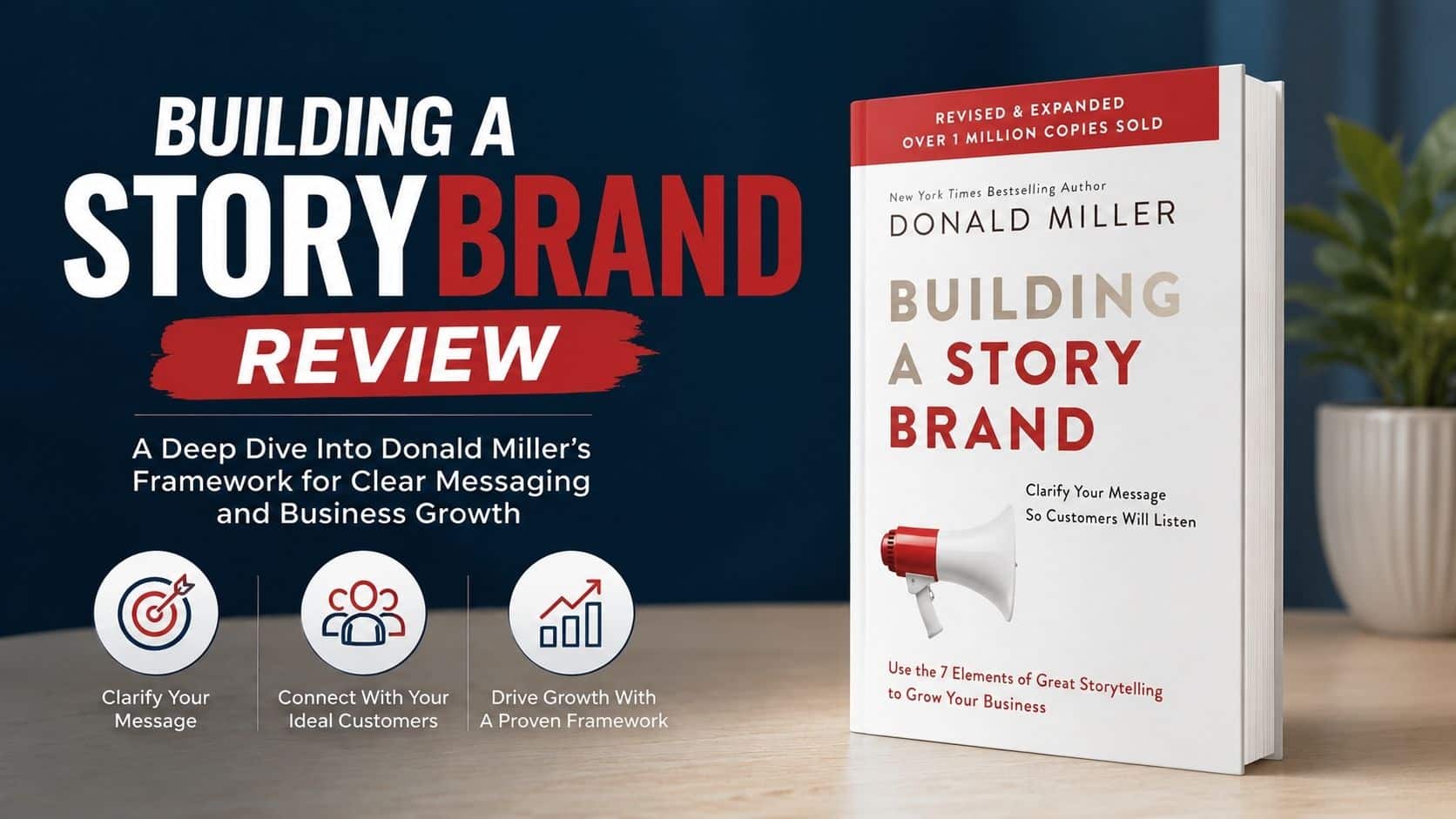
Every so often, I read a book and find myself mentally listing the clients I want to hand it to. Building a StoryBrand 2.0 by Donald Miller is one of those books.
If you own a business with a website, this one is for you. Not because your website looks wrong, but because of something I see week in, week out as a web designer: beautifully built websites that stay quiet about the one thing visitors actually want to know. What do you do, and how does it make my life better?
Miller’s original Building a StoryBrand came out in 2017 and quietly became one of the most influential marketing books of the last decade. Over a million business owners have used it. The 2.0 edition, released in January 2025, is a full revision rather than a light polish, and it lands at exactly the right time. With so much noise online, and so much of it now generated by AI, a clear message is worth more than ever.
The things that really stood out to me
I won’t spoil the whole framework, because working through it yourself is half the value. But here are the ideas that made me put the book down and open a client’s homepage to check it against them.
Your customer is the hero, not you. This is the heart of the book. Most websites open with “We’ve been established since 2003” or “We’re passionate about excellence”. Miller’s point is that nobody buys because you’re the hero of the story. They buy because you’re the guide who helps them win. Think Gandalf, not Frodo. The moment you reposition your business as the guide, your whole website changes tone.
People don’t buy the best products, they buy the ones they can understand fastest. Miller talks about the mental effort it takes for a visitor to work out what you offer. If your homepage makes them burn calories figuring it out, they’ll leave and find someone clearer. Clarity beats cleverness every single time.
The seven-part story framework. The book walks you through seven elements that every great story shares: a character with a problem meets a guide who gives them a plan, calls them to action, and helps them avoid failure and achieve success. Then it shows you how to map your business onto that structure. It sounds simple. It is simple. That’s why it works.
What’s new in 2.0. This edition deepens the original framework, introduces the idea of a single “controlling idea” that unifies your whole message, and comes with access to StoryBrand AI, a tool built on the framework that helps you draft website copy, emails and social posts. I’m usually sceptical of AI bolt-ons in business books, but this one makes sense, because AI writing tools are only as good as the thinking you feed them. The framework is the thinking.
If any of that has your mind drifting to your own homepage, that’s rather the point. Grab a copy, read it with your website open in another tab, and you’ll see your own business through your customers’ eyes. It’s one of the best-value pieces of marketing training you’ll ever buy.
Why you can action this in your business today
The lovely thing about this book is that you don’t need to finish it before it starts paying for itself. Here are a few things you can try this week:
- Run the grunt test on your homepage. Within five seconds of landing on your site, could a stranger answer three questions: What do you offer? How will it make my life better? What do I need to do to buy it? If not, your header section needs work before anything else does.
- Rewrite your headline around your customer’s problem. Swap “Award-winning accountancy services” for something like “Stop dreading your tax return”. Lead with the problem you solve, then introduce yourself as the guide.
- Give people one obvious next step. Every page should have a clear, repeated call to action. “Book a call”, “Get a quote”, “Order a sample”. One primary action, made impossible to miss. A dozen competing buttons is the same as none.
- Write your one-liner. Miller’s formula is problem, solution, result. For example: “Most small business websites confuse visitors. We build WordPress sites with a crystal-clear message, so more of your visitors become enquiries.” Pop yours in your email signature and social bios once you’ve nailed it.
- Cut the jargon. Read your About page aloud. Every phrase like “bespoke synergistic solutions” gets replaced with words your customers actually use when they describe their problem to you on the phone.
How reading makes you a better business owner
I’ll be honest about my own experience here. As a web designer, I spent years thinking about websites in terms of design, speed, plugins and rankings. All of that matters enormously, and it’s the bread and butter of what we do at Webalogic. But the first StoryBrand book changed the order I think in. Now, before I open a design tool for any project, I want to know the story the site needs to tell. Who is the hero? What’s their problem? What does success look like for them?
That shift didn’t come from a design tutorial. It came from a book, and that’s the wider lesson. Reading outside your day-to-day pulls you up out of the weeds of running a business and lets you look at it the way a customer does. An hour with the right book can save you months of tweaking the wrong things.
Did a book ever change your business?
Here’s a thought worth pinching for your own business. If a book has genuinely shaped how you work, tell your customers about it. Write your own post like this one, mention it in your newsletter, or even send a copy to your best clients as a thank you. It’s a generous, memorable touch that says far more about your values than another branded mug ever could, and it starts conversations that lead to work.
More recommendations along the same lines
If Building a StoryBrand 2.0 whets your appetite, these pair beautifully with it:
- Marketing Made Simple by Donald Miller: the practical follow-up, walking you through building a sales funnel around your newly clarified message, including exactly what goes on each section of your website.
- How to Grow Your Small Business by Donald Miller: zooms out from messaging to the six parts of a healthy small business.
- They Ask, You Answer by Marcus Sheridan: a brilliant companion on answering your customers’ real questions through your website content, which does wonders for your SEO too.
Over to you
Have you read Building a StoryBrand, or is there a book that genuinely changed how you run your business? I’d love to hear about it. Let me know your recommendations as I’m always after the next one for the reading pile.
And if you’ve read this far and suspect your own website wouldn’t pass the grunt test, that’s fixable. Need a hand putting any of this into practice? Take a look at our WordPress web design services, or book a call and we can talk it through.